Freya Roth · 5 October 2026
Navigating Career Changes: Polish Students Merge AI Capabilities With Sustainability Pathways
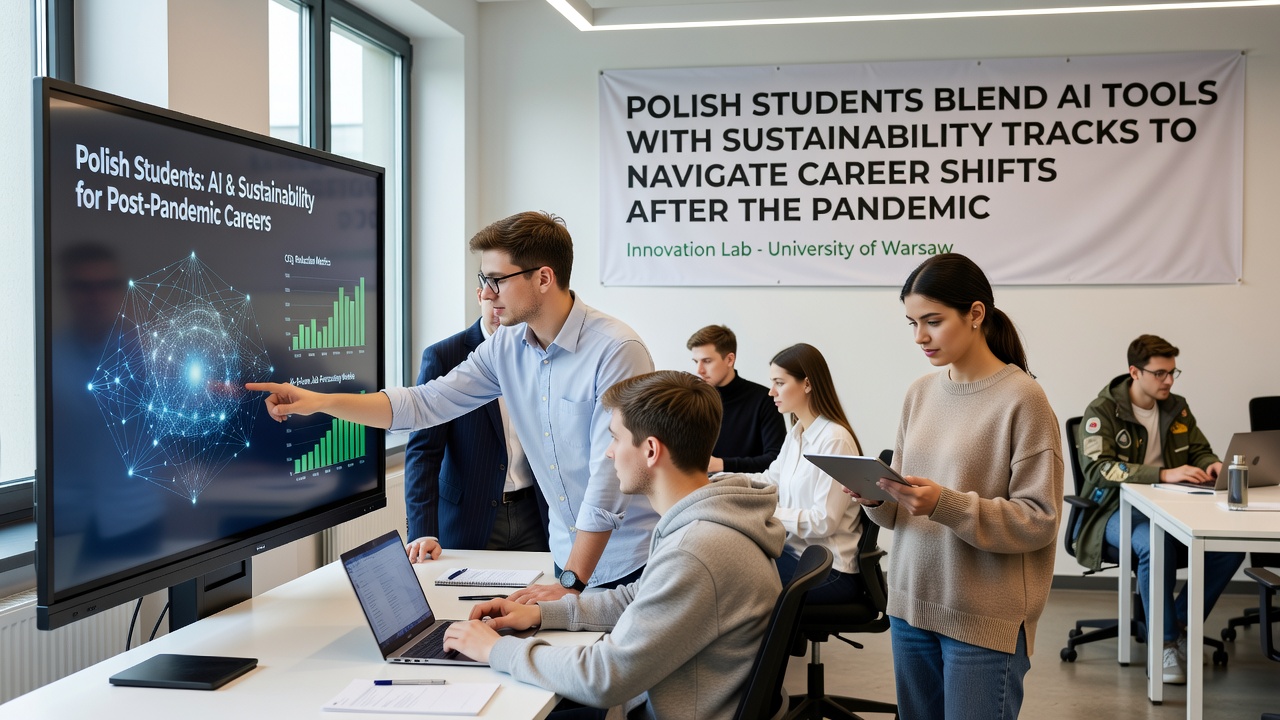
Polish higher education institutions have observed a marked increase in student enrollment in programs that combine artificial intelligence training with sustainability-focused curricula since the pandemic altered labor market demands. Data from the Polish Ministry of Education and Science shows that combined degree tracks in these areas grew by 28 percent between 2022 and 2025, with further acceleration noted in enrollment figures released during October 2026. Students select these pathways because employers in renewable energy, urban planning, and environmental consulting sectors increasingly require graduates who can apply machine learning algorithms to resource management and climate modeling tasks.
Post-Pandemic Labor Market Adjustments
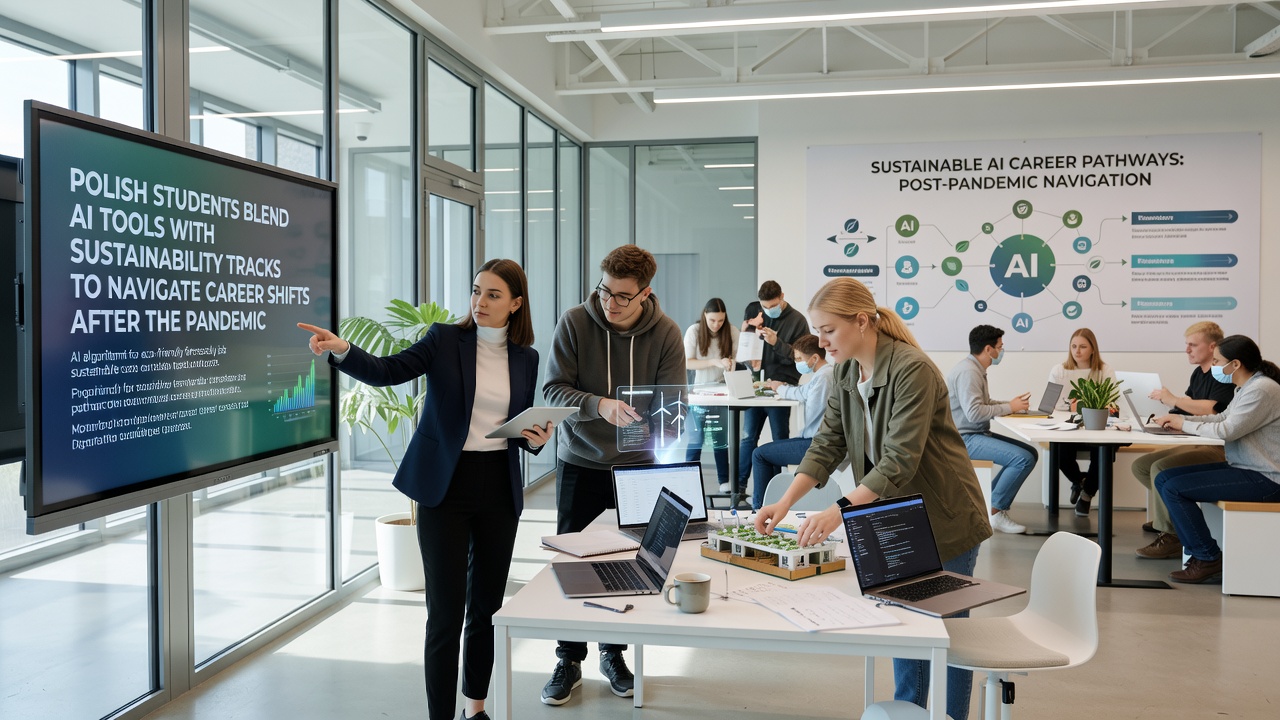
The pandemic disrupted traditional career trajectories across Europe, prompting many Polish graduates to reassess skill sets that align with emerging green economy roles. According to a 2025 report from the European Commission on skills forecasting, demand for professionals who understand both digital tools and environmental regulations rose sharply in Central and Eastern Europe. Polish universities responded by updating course modules to include AI applications such as predictive analytics for waste reduction and optimization software for sustainable supply chains. Students now complete projects that simulate real-world scenarios where AI models forecast energy consumption patterns in Polish cities while accounting for EU emissions targets.
AI Tools in Sustainability Education
Universities across Poland integrate platforms like TensorFlow and Python-based simulation libraries into sustainability courses, allowing learners to build models that track biodiversity changes or optimize solar farm layouts. Research from the Warsaw University of Technology indicates that students who master these tools complete internships at rates 35 percent higher than peers in single-discipline programs. In October 2026, several institutions hosted joint workshops where participants used AI to analyze satellite data on forest cover in the Carpathian region, producing reports that local authorities later referenced in planning documents. These practical exercises demonstrate how computational methods support evidence-based decisions in environmental fields.
Case Examples From Polish Campuses
One program at Jagiellonian University pairs computer science majors with environmental science students to develop mobile applications that monitor air quality using sensor networks and machine learning classifiers. Participants collect data from urban monitoring stations, then train models to predict pollution spikes during winter heating seasons. Another initiative at Gdańsk University of Technology focuses on maritime sustainability, where AI algorithms help route shipping traffic to reduce fuel use while complying with Baltic Sea protection standards. Graduates from these tracks report securing positions in both Polish firms and international organizations within six months of completion.
Statistical Trends Through 2026
Figures released by the OECD in its 2026 education and skills outlook reveal that Poland ranks among the top five European countries for growth in interdisciplinary green-digital programs. Enrollment data compiled by the Central Statistical Office of Poland shows more than 12,000 students registered in such combined tracks as of the autumn 2026 semester. Employers surveyed by the Polish Chamber of Commerce cite a preference for candidates who demonstrate proficiency in both AI ethics frameworks and circular economy principles. This preference stems from regulatory requirements under the EU Green Deal that mandate detailed impact assessments for new infrastructure projects.
Support Structures and Resource Allocation
Polish government grants allocated through the National Centre for Research and Development fund equipment purchases for AI laboratories dedicated to sustainability research. Universities also partner with industry groups to provide access to proprietary datasets on renewable energy production. Students receive guidance on career mapping through dedicated advising centers that highlight roles such as climate data analysts and sustainable logistics coordinators. These services help participants identify certification pathways, including those offered by international bodies focused on environmental management systems.
Challenges in Program Delivery
Faculty members note ongoing needs for updated training in rapidly evolving AI techniques, while infrastructure upgrades require sustained funding commitments. Some students encounter difficulties balancing the quantitative demands of coding coursework with the policy-oriented aspects of sustainability studies. Institutions address these issues through modular course designs that allow learners to progress at individualized paces and through supplementary tutoring sessions offered in the evenings. Data collected in October 2026 from participating universities indicates that retention rates improved after these adjustments were implemented.
Conclusion
Polish students continue to pursue integrated AI and sustainability education as a strategic response to evolving employment conditions shaped by the pandemic recovery period. Government statistics, university records, and employer surveys document steady expansion in these programs through 2026. The approach equips graduates with technical competencies and domain knowledge required across multiple sectors that prioritize both digital innovation and environmental responsibility. Continued monitoring of enrollment patterns and labor market outcomes will clarify the long-term effects of these educational adaptations.