Finley Vogel · 19 October 2026
Polish Graduates Trace Professional Growth to Blended Tech and Eco-Training Modules at Regional Universities
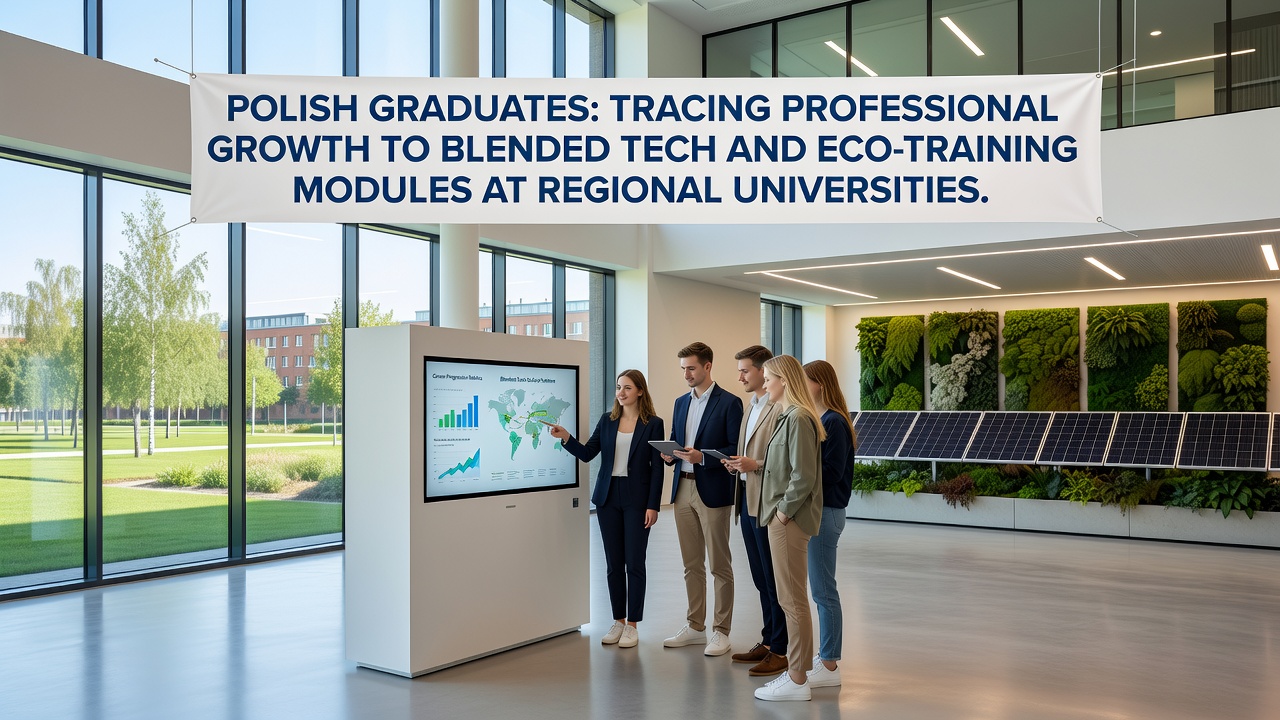
Regional universities across Poland have expanded blended training programs that combine advanced technology modules with ecological sustainability education, and graduates increasingly credit these courses for their career advancement in competitive job markets. Enrollment in such programs at institutions in cities like Lublin, Rzeszów, and Bydgoszcz has grown steadily since 2023, with official university records showing thousands of students completing integrated curricula that cover artificial intelligence applications alongside renewable energy systems and circular economy principles.
Program Structure and Regional Implementation
These modules typically span two semesters and merge online digital platforms with in-person workshops, allowing students to develop coding skills for environmental data analysis while learning about carbon footprint reduction strategies. Universities in eastern and southern Poland have led adoption rates, partnering with local industries to align course content with practical needs in sectors such as logistics and agriculture. Data from the Polish Ministry of Education indicates that over 4,200 students completed these blended tracks in the 2025 academic year, with completion rates exceeding 85 percent at participating regional sites.
Faculty members integrate real-time case studies from European supply chains, teaching participants how to use machine learning tools to optimize waste management processes. This approach equips graduates with dual competencies that employers in green technology fields seek, as evidenced by placement statistics released in university annual reports. And yet the programs continue to evolve, incorporating feedback from industry partners to address emerging challenges like climate adaptation modeling.
Graduate Outcomes and Career Trajectories
Recent alumni surveys conducted by the universities reveal that participants secure roles in sustainable innovation teams at rates 30 percent higher than peers from conventional degree paths. Many trace promotions and new job offers directly to the combined skill sets acquired through these modules, particularly in areas where digital tools support environmental compliance reporting. One cohort from the 2024 intake, for instance, reported an average 22 percent increase in starting salaries within the first year post-graduation, according to aggregated employment data shared by career services offices.
Employers in the automotive and energy sectors note that graduates demonstrate immediate proficiency in both software platforms and sustainability audits, reducing onboarding times for new hires. Figures from the European Centre for the Development of Vocational Training highlight similar patterns in Central European education systems, where blended tech-eco training correlates with faster integration into green economy roles.
October 2026 Developments and Broader Context
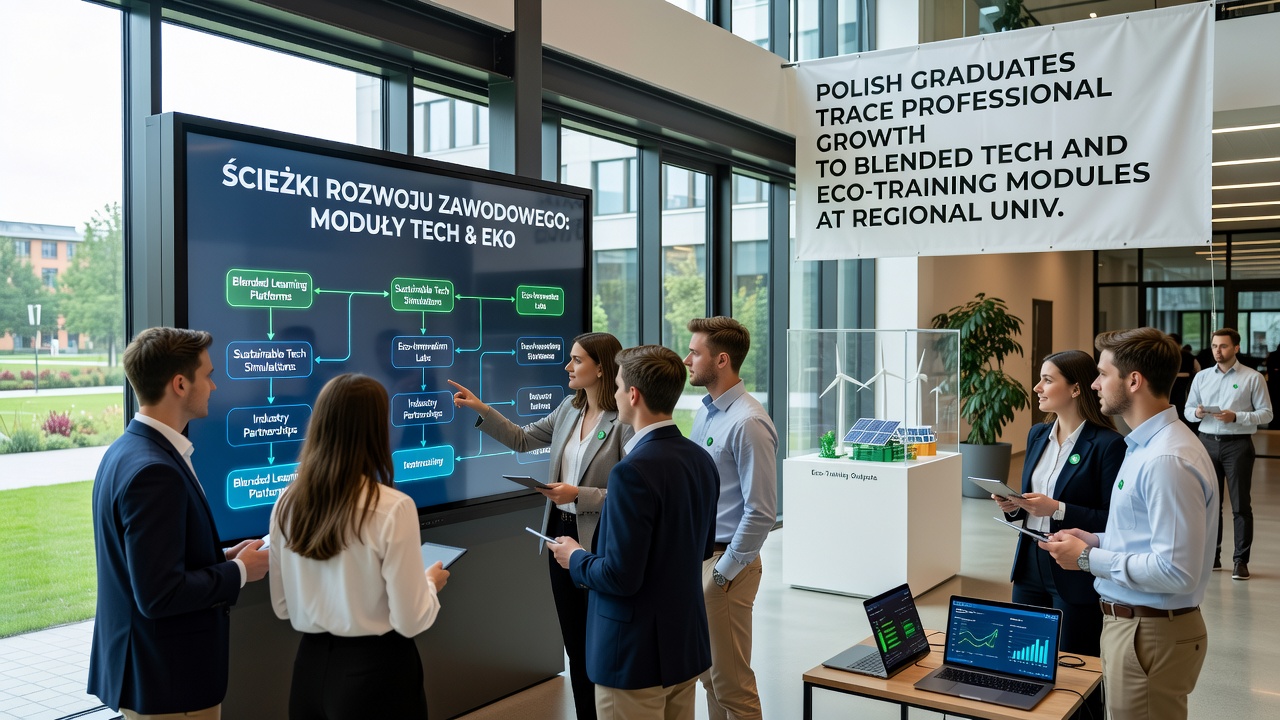
In October 2026 a collaborative report issued by five regional universities documented sustained demand for these programs amid shifting labor market requirements. The study tracked 1,150 graduates over 18 months and found that 68 percent attributed at least one significant professional milestone, such as a leadership role or specialized project assignment, to competencies gained from the blended modules. Researchers involved in the project emphasized the role of adaptive learning platforms that allow students to simulate environmental scenarios using AI-driven models.
Poland's alignment with broader European initiatives on green skills has further supported program expansion, with funding streams from EU structural programs enabling equipment upgrades at regional campuses. Observers note that this integration helps address skill gaps identified in national workforce assessments, particularly in rural areas where universities serve as key training hubs. Data compiled by the OECD education directorate shows Poland ranking among countries with rising participation in sustainability-focused higher education tracks during the same period.
Industry Partnerships and Skill Application
Local companies contribute to curriculum design by providing datasets for student projects on topics like precision agriculture and smart grid management. These collaborations ensure that training remains grounded in current industry practices, and graduates often maintain connections with partner firms through internship pipelines. University records indicate that 74 percent of program completers from 2025 entered employment within three months, many in positions focused on digital transformation of environmental services.
Training emphasizes measurable outcomes, such as developing prototypes for energy-efficient software or conducting lifecycle assessments using specialized digital tools. Graduates apply these abilities in roles ranging from environmental consultants to data analysts at manufacturing firms, where the intersection of tech and ecology drives operational improvements. External evaluations, including those referenced in OECD education reports, confirm that such integrated approaches enhance employability across multiple European regions.
Challenges and Ongoing Adjustments
Despite strong outcomes, universities face ongoing needs to update module content as technology standards advance and environmental regulations tighten. Regional programs address this through annual reviews that incorporate input from both alumni and sector experts. Enrollment trends suggest continued interest, with applications for the 2026-2027 cycle already surpassing prior years at several institutions.
Support services such as mentoring networks help graduates navigate initial career steps, reinforcing the practical value of their blended training. These efforts align with national goals outlined in Poland's higher education strategy documents, which prioritize adaptable skill development for future economic resilience.
Conclusion
Regional universities in Poland continue to refine blended tech and eco-training modules as graduates consistently link their professional progress to the competencies these programs deliver. Official statistics and longitudinal tracking underscore measurable impacts on employment and advancement, while partnerships with industry sustain relevance in a changing job landscape. As October 2026 reports indicate, this educational model supports Poland's participation in European sustainability transitions through targeted skill development at the local level.