Parker Reed · 2 November 2026
Polish Regional Universities Roll Out AI-Integrated Sustainability Training to Support Graduates in Dynamic Employment Sectors
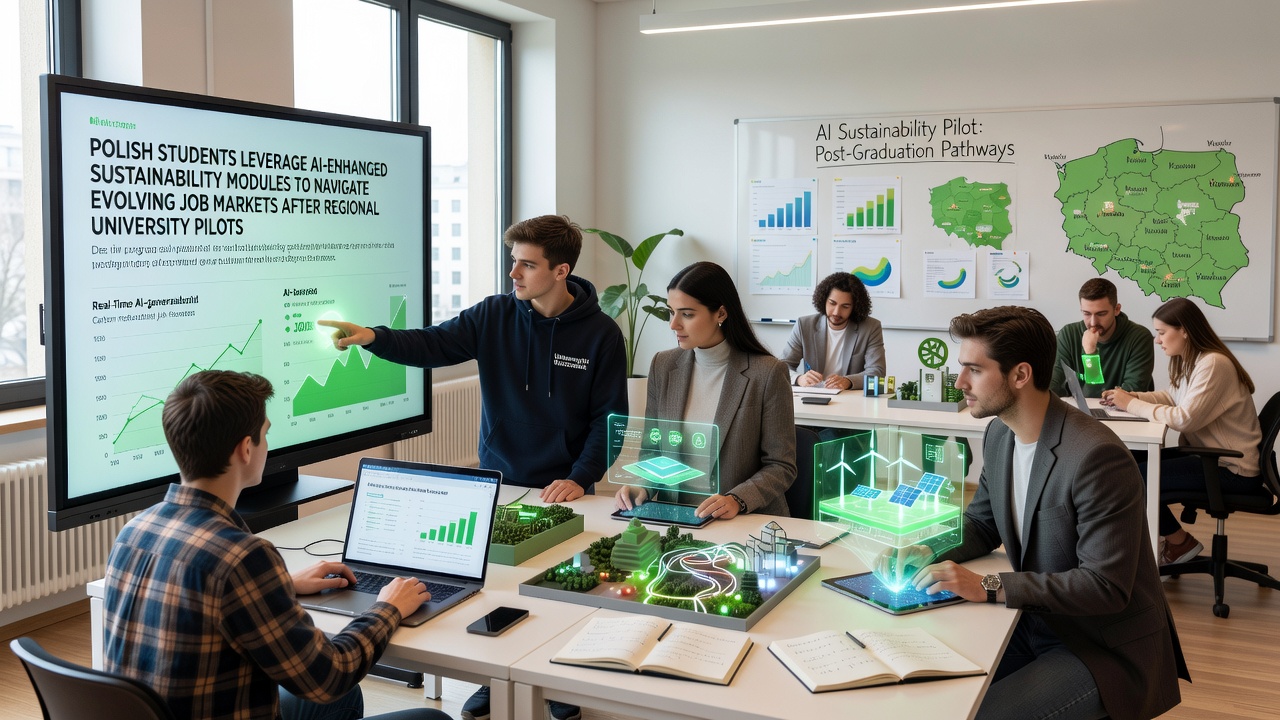
Regional universities across Poland have launched pilot programs that embed artificial intelligence tools into sustainability-focused coursework, and these initiatives aim to equip students with combined technical and environmental competencies for shifting labor markets driven by climate policies and digital transformation. Data from early implementations shows participants gaining proficiency in areas such as predictive modeling for resource management and automated monitoring of ecological systems, which align with growing employer needs in renewable energy, urban planning, and supply chain optimization. Observers note that the pilots, conducted at institutions in several voivodeships, emphasize practical applications where AI algorithms analyze environmental data sets to propose sustainable solutions, thereby preparing learners for roles that require both ecological awareness and computational expertise.
Expansion of Pilot Programs Across Multiple Regions
Universities in cities including Poznań, Gdańsk, and Wrocław joined the effort following initial trials in central locations, and enrollment figures indicate steady participation from undergraduate and graduate cohorts since the programs began. Research indicates that modules incorporate machine learning techniques to simulate climate scenarios and evaluate the long-term impacts of policy decisions on local ecosystems, which gives students hands-on experience with tools already deployed in professional settings. Those involved in the pilots report completing projects that integrate satellite imagery analysis with AI-driven forecasting, and such activities mirror tasks performed by analysts in environmental consulting firms and governmental agencies focused on green transitions.
According to reports from the European Commission on skills development, demand for professionals blending digital literacy with sustainability knowledge has risen across EU member states, and Polish programs reflect this trend by updating curricula to include real-time data processing for waste reduction strategies and energy efficiency assessments. Students engage with platforms that use neural networks to optimize agricultural outputs under variable weather conditions, for instance, while also studying regulatory frameworks that shape job requirements in these fields.
Skill Development Through Combined AI and Eco Modules
Each module pairs core sustainability concepts with AI applications, and participants learn to code basic scripts for carbon footprint calculations alongside traditional lectures on biodiversity conservation. Evidence from the pilots reveals improved problem-solving abilities among participants, as measured by project outcomes where teams developed apps that track urban heat islands and suggest mitigation measures using publicly available datasets. This approach allows learners to address complex challenges that single-discipline training might overlook, because modern workplaces increasingly require interdisciplinary teams capable of interpreting both environmental metrics and algorithmic outputs.

By November 2026, updated assessments from the participating institutions will provide additional metrics on employment placement rates for graduates, and preliminary observations suggest these students secure positions in sectors such as sustainable manufacturing and climate adaptation consulting at higher frequencies than peers from conventional programs. The structure of the coursework encourages iterative design processes, where AI tools refine initial sustainability plans based on feedback loops from simulated stakeholder inputs, and this method builds adaptability that employers value amid rapid regulatory changes.
Alignment With Broader Labor Market Shifts
Job markets in Poland and neighboring countries continue to evolve under influences from the European Green Deal and national digital strategies, and the university pilots respond directly by prioritizing competencies like AI-assisted lifecycle assessments for products and services. Figures from OECD studies on future workforce needs highlight that roles involving environmental impact prediction and automated compliance checking are expanding, whereas purely administrative positions decline, which underscores the relevance of these educational adaptations. Participants in the programs often collaborate with local businesses during internships, applying their training to actual challenges such as optimizing logistics routes to lower emissions through algorithmic modeling.
One cohort at a pilot site developed a prototype system that integrates weather data with AI to advise farmers on crop rotation for soil health preservation, and similar projects demonstrate how the training translates theoretical knowledge into marketable innovations. External evaluations note that these experiences enhance resumes with tangible deliverables, positioning graduates competitively in fields where hybrid skills command premium compensation packages. The integration of such modules across regional universities also fosters knowledge exchange networks, allowing instructors to share best practices on AI tool selection and sustainability metrics that maintain academic rigor while addressing practical demands.
Conclusion
These regional university efforts illustrate a coordinated response to interconnected technological and environmental pressures on employment landscapes, and continued monitoring through 2026 will clarify long-term outcomes for student cohorts. The pilots establish frameworks that other educational systems might reference when updating their own offerings to meet similar market conditions.